
AI project to support next generation of mental health clinicians
Date added: 17 July 2026
Last updated: 17 July 2026
Kent and Medway Mental Health NHS Trust is leading an innovative project exploring how artificial intelligence (AI) generated virtual patients can help medical students develop essential clinical skills in psychiatry and mental health care.
Working with partners at Kent and Medway Medical School and the University of Kent, the 18-month project is exploring how AI technology can complement existing approaches to medical education and provide students with additional opportunities to practise important clinical conversations.
Funded by Kent and Medway Mental Health NHS Trust, the project brings together expertise from psychiatry, medical education, health research, lived experience, human-computer interaction and AI technology.
The aim is not to replace existing teaching methods, but to provide an additional way for students to practise key skills in a safe and structured environment before applying them in real clinical settings.
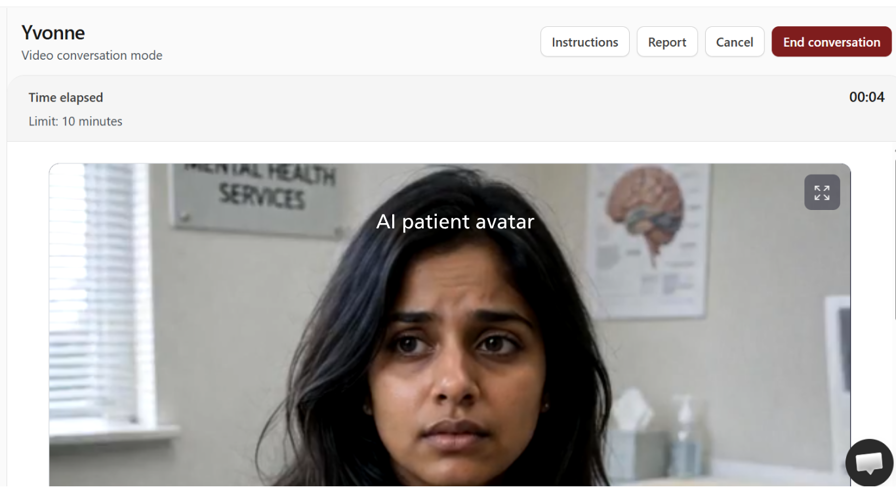
Clinical practice in psychiatry relies on more than medical knowledge. Students need to develop the ability to listen carefully, ask sensitive questions, show empathy and build trusting relationships with patients. These skills are already developed through placements, tutor-led teaching, role play, actor-based simulation and working alongside clinical teams.
The project is exploring whether AI virtual patients can provide further opportunities for students to rehearse important conversations and build confidence before meeting real patients.
Dr Jo Rodda, Consultant in Older Adult Psychiatry Kent and Medway Mental Health NHS Trust and Mental Health Teaching Lead at Kent and Medway Medical School said: “We hope the avatars will give students more opportunities to rehearse the conversations that matter, so they can make the most of their clinical placements. Developing confidence in communication is a vital part of becoming an effective mental health professional.”
Professor Sukhi Shergill, Director of Research at Kent and Medway Mental Health NHS Trust and Kent and Medway Medical School, said: “AI is developing rapidly and there are exciting possibilities for how it can support education and training. However, new approaches need careful evaluation to ensure they are safe, effective and genuinely add value for learners and, ultimately, patients.”
The team has co-produced realistic virtual patient avatars, computer generated characters that can interact and respond to students, alongside people with lived experience of mental illness and medical students from Kent and Medway Medical School and other universities.
This co-production approach aims to ensure the scenarios are realistic, respectful and focused on improving learning.
The virtual patients will now be piloted with Year 3 students at Kent and Medway Medical School during a psychiatry revision day. Students will use the avatars to practise psychiatric history-taking, communication skills, empathy and clinical reasoning before sharing their feedback with researchers.
Rachel Daly, Director of Medical Education at Kent and Medway Mental Health NHS Trust, said: “High quality education and training are central to delivering excellent patient care. This project demonstrates how innovation can support our future workforce by creating new opportunities for students to practise and develop their skills.
“The involvement of people with lived experience is particularly important in ensuring this technology reflects the realities of mental health care and helps prepare students to provide compassionate, person-centred support.”
The findings from the pilot will help refine the technology ahead of a planned trial exploring its use as a self-directed learning tool during the next academic year.
Mudasir Firdosi, Director of Undergraduate Medical Education at Kent and Medway Mental Health NHS Trust said: “Our students need opportunities to develop confidence in complex clinical conversations, particularly in psychiatry where communication and relationships are fundamental.
“This project allows us to explore how emerging technology can complement existing teaching and give students more opportunities to practise in a supportive environment, helping them prepare for their future roles as doctors.”
The project highlights the potential for NHS-led innovation to strengthen medical education and support the development of future mental health clinicians through collaboration between healthcare, education and technology partners.


