
AI as companion and adviser: researchers call for greater understanding of its impact on human relationships
Date added: 28 August 2026
Last updated: 28 August 2026
Artificial Intelligence is becoming more than a tool for many people. Large Language Models are increasingly being used for companionship, advice and emotional support. Researchers at Kent and Medway Medical School and collaborating institutes are examining what sustained interactions with these systems could mean for our relationships, mental health and wellbeing.
In a Correspondence published in Nature Machine Intelligence, the researchers argue that the effects of human-AI interaction may extend beyond individual conversations with AI, as these systems are designed to respond in a personal and supportive way. Habits and expectations developed through repeated interactions, could affect how people communicate, regulate emotions, seek support and respond to disagreement in their relationships with family, friends and colleagues.
The article, Human AI interactions reshape the self and our social networks, was published on May 28. It brings together evidence and ideas from mental health research, human-AI interaction, social connection and network science, calling for research that tracks the effects of AI use across individuals, relationships and wider social networks.
The work was led by Dr Andreia Sofia Teixeira, Associate Professor at the Network Science Institute at Northeastern University London and Visiting Academic at Kent and Medway Medical School. It was co-authored by Professor Sukhi Shergill, Director of Research and Innovation at Kent and Medway Mental Health NHS Trust and Director of Research at Kent and Medway Medical School, and Dr Guy Laban of Ben-Gurion University of the Negev.
The authors are particularly interested in whether habits developed through regular conversations with AI could carry over into human relationships. People may become accustomed to immediate responses, constant availability or agreement, which could affect how they experience relationships where disagreement, compromise and mutual support are part of everyday life.
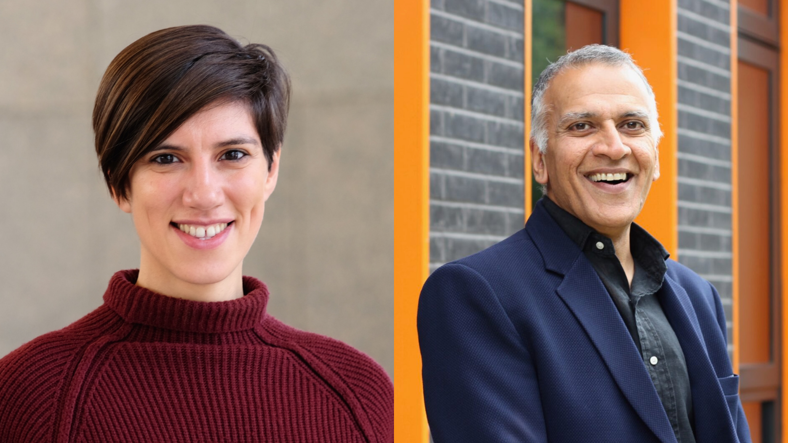
Dr Andreia Sofia Teixeira, lead author, said: "The question is not simply what sustained interaction with AI does at any one level. We need to understand how repeated interactions may reshape the self - our emotions, cognition and behaviour - and how those changes spill over into the way we engage with the world around us, including our personal relationships and social networks. We need a better understanding of the mechanisms and contexts in which AI can strengthen individual agency and human connection, and when it may instead displace or undermine them."
The research forms part of wider work by Dr Teixeira, Asia Maurich Novelli and Professor Shergill looking at how human AI interactions may affect mental health, wellbeing and relationships.
Professor Sukhi Shergill, Director of Research and Innovation at Kent and Medway Mental Health NHS Trust and Director of Research at Kent and Medway Medical School, said: "This is a fantastic achievement for our research community. Nature Machine Intelligence is one of the leading journals in this field, so having this work accepted is a significant recognition of its quality and importance.
"AI is becoming part of the social environment in which people live, work and communicate. For mental health research and care, we need to understand its impact on the relationships and social networks that support wellbeing, resilience and recovery."
The researchers stress that AI should not be seen as simply good or bad. They are calling for longitudinal and network-based research to identify when AI can support human relationships and mental health, and when it could reduce the human contact that people need.
For Kent and Medway Mental Health NHS Trust, the work supports its commitment to understanding how new technologies may affect mental health and wellbeing. As the NHS considers how AI can be used safely and effectively, research such as this can help ensure technology supports people while keeping human relationships at the heart of mental health care.
The full paper can be accessed here: Human–AI interactions reshape the self and our social networks | Nature Machine Intelligence


